T
Teach Me AnythingTMA
Video History
Page 15 / 47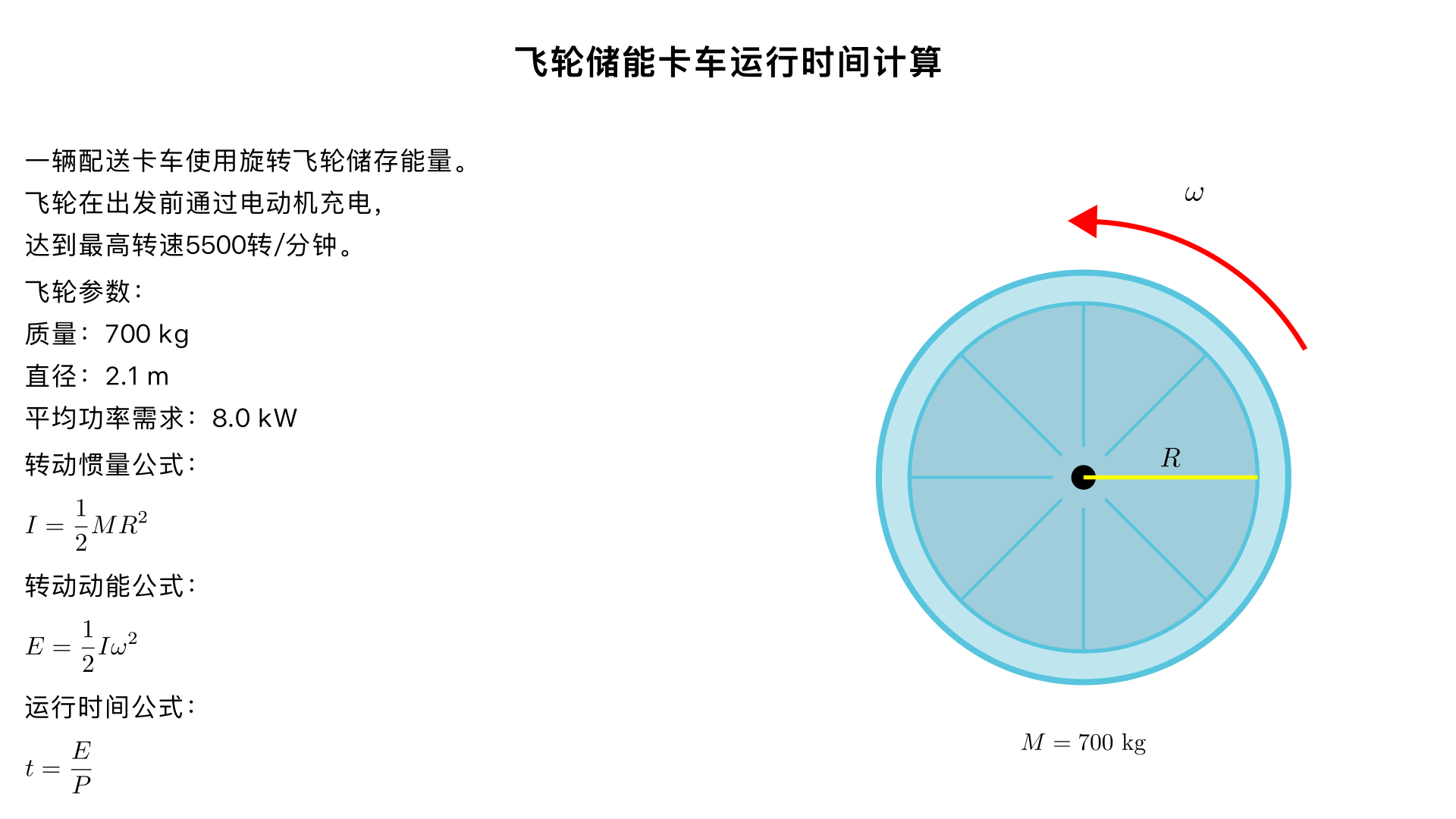
▶
A fleet of delivery trucks operates by making use of the energy stored in a rotating flywheel. The trucks are “charged up” before leaving by using an electric motor to get the flywheel up to its top speed of 5500 revolutions per minute. If one such flywheel is a solid cylinder of mass 700 kg and a diameter of 2.1 m, how long can the truck operate before returning to base for recharging if its average power requirement is 8.0 kilowatts?
▶
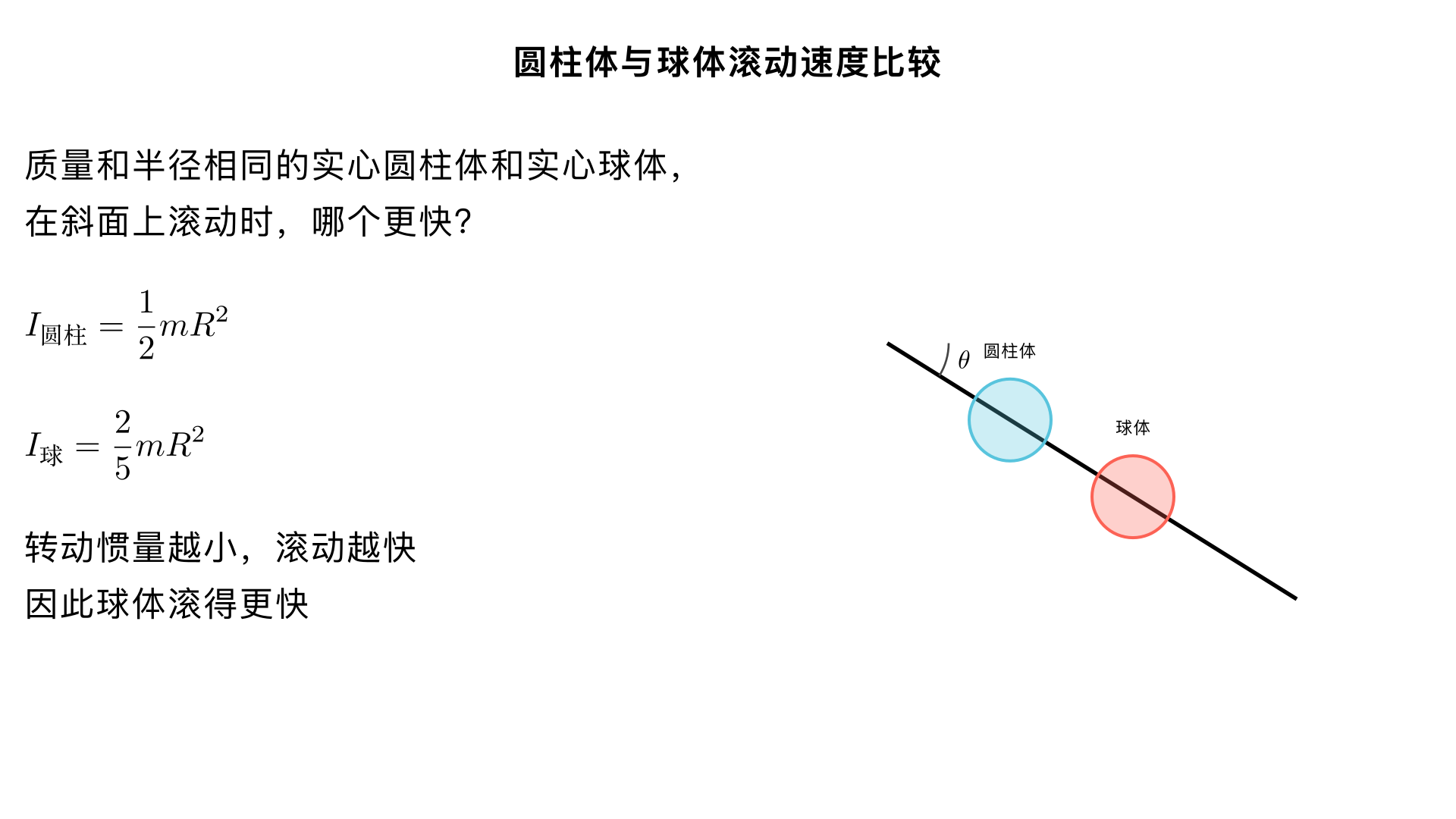
A solid cylinder and a solid sphere have the same mass and radius. Which object will roll down an inclined plane faster and why?
▶
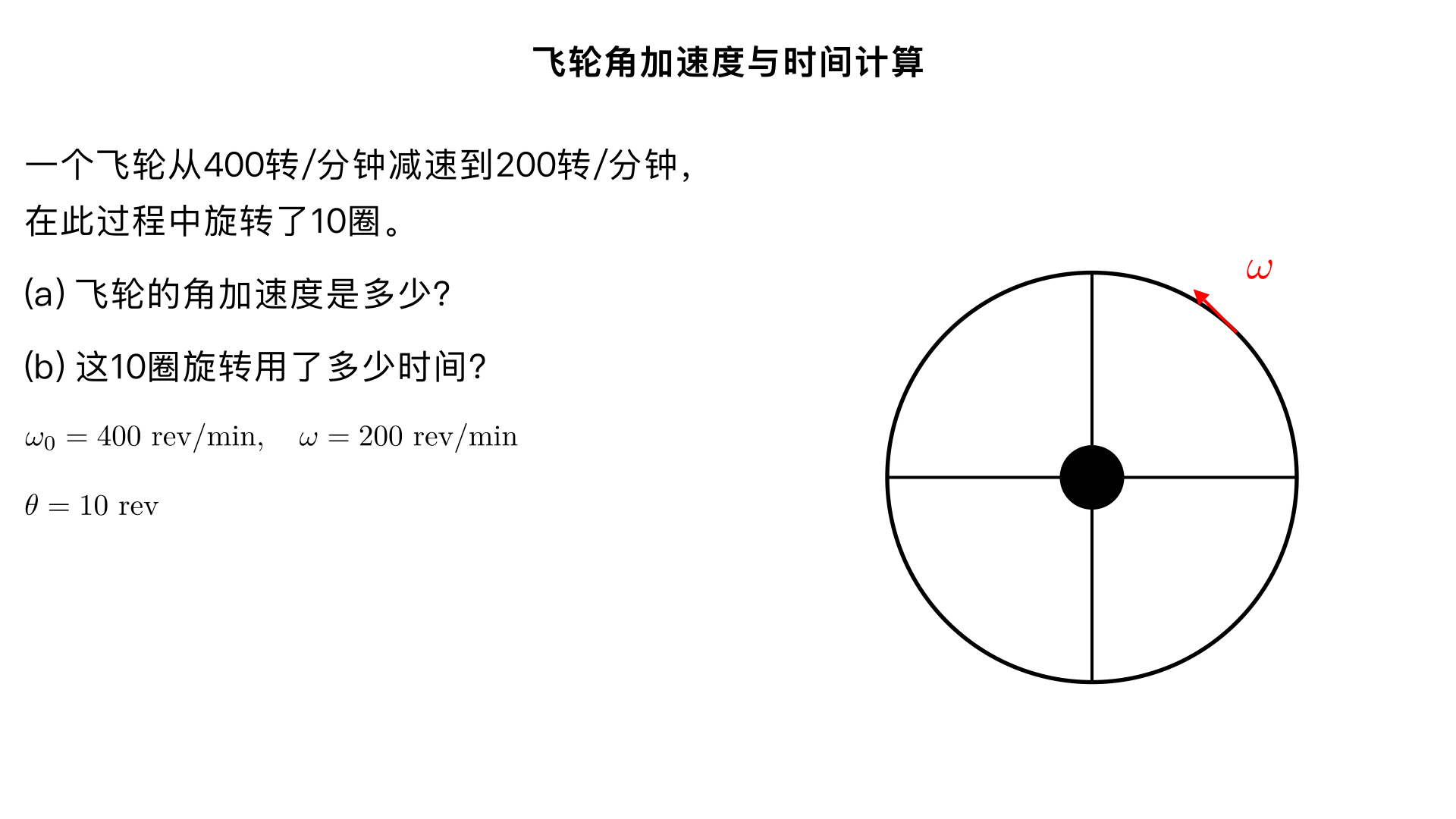
A flywheel slows from 400 to 200 rev/min while rotating through 10 revolutions. (a) What is the angular acceleration of the flywheel (in rad/s^2 )? (b) How much time elapses during the 10 revolutions?
![**3. (15 pts)** Recall the definition of moment of inertia for a continuous mass distribution:
\[
I = \int r^2 \, dm
\]
Consider a rod of length \(L\) with nonuniform one-dimensional mass density.
If the rod is laid out along the \(x\)-axis with one end at the origin and the other end at \(x = L\), then the density is given by:
\[
\rho(x) = \frac{x}{L}
\]
Find the rod’s moment of inertia about the \(y\)-axis (i.e. about its own end).
State your final answer in terms of total mass \(M\) and length \(L\).](https://manimvideo.explanation.fun/video/cover/591430616216907777.png)
▶
**3. (15 pts)** Recall the definition of moment of inertia for a continuous mass distribution: \[ I = \int r^2 \, dm \] Consider a rod of length \(L\) with nonuniform one-dimensional mass density. If the rod is laid out along the \(x\)-axis with one end at the origin and the other end at \(x = L\), then the density is given by: \[ \rho(x) = \frac{x}{L} \] Find the rod’s moment of inertia about the \(y\)-axis (i.e. about its own end). State your final answer in terms of total mass \(M\) and length \(L\).
▶
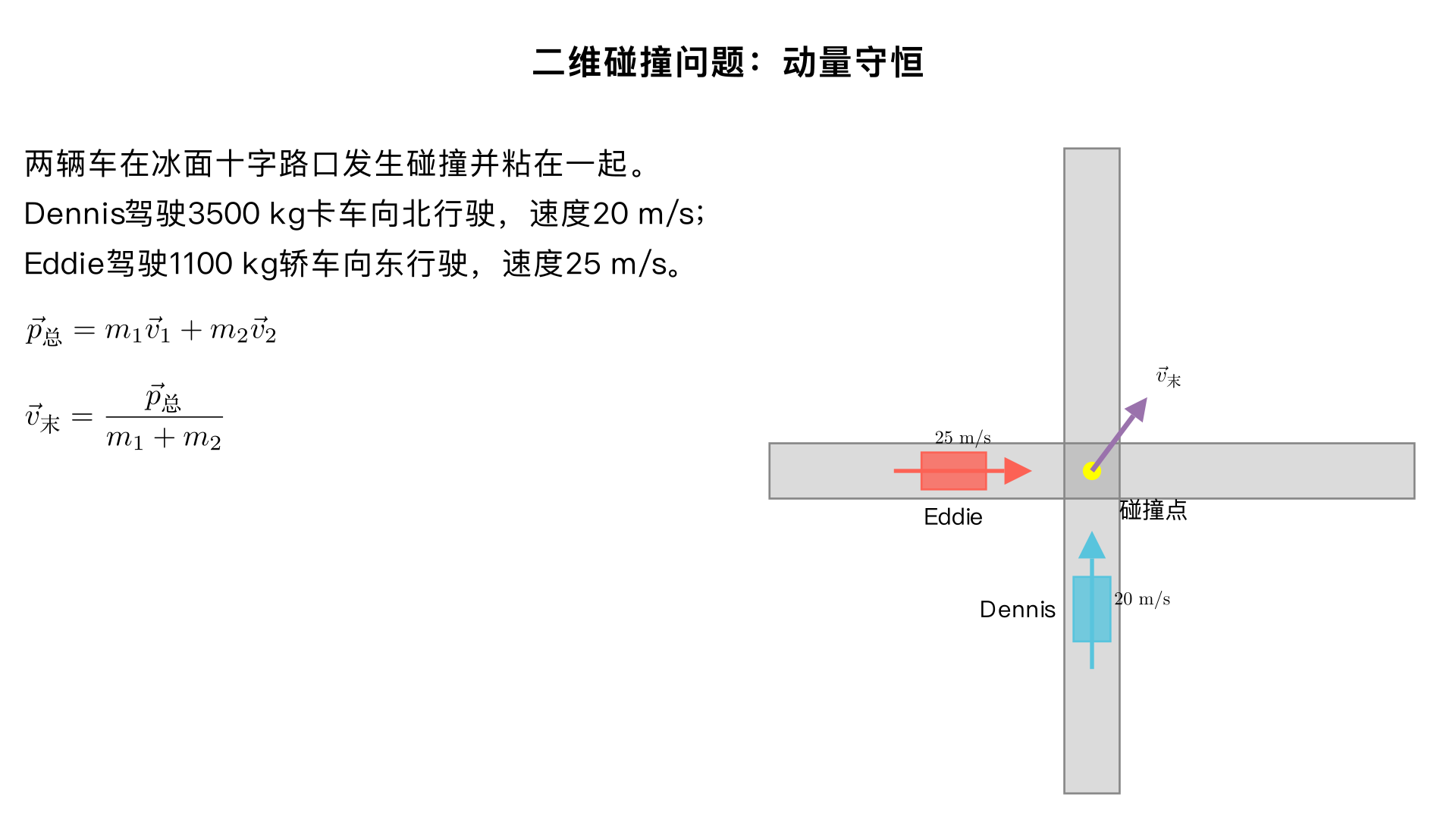
Two vehicles are approaching an extremely icy four-way perpendicular intersection. Dennis is driving his 3500 kg truck northward at 20 m/s while Eddie drives eastward in his 1100 kg car at 25 m/s. They collide and stick together. What is the speed and direction of their combined wreckage?
▶
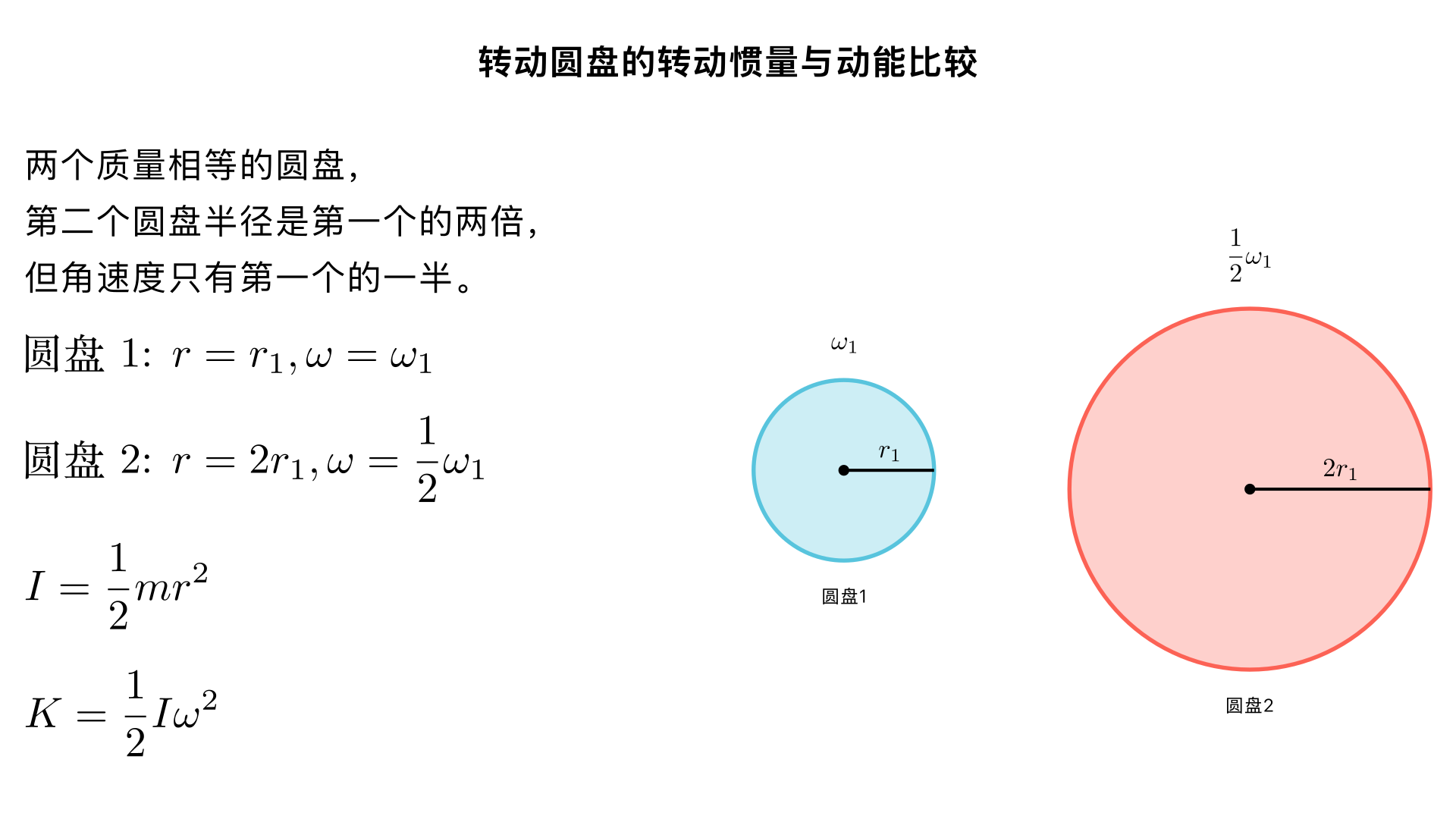
The disks shown in the figure have equal mass. The second disk has twice the radius of the first, but is spinning with only half the angular velocity. (a) Compare the moment of inertia of the two disks: which is greater, or are they equal? (b) Compare the rotational kinetic energy of the two disks: which is greater, or are they equal? disk1: r=r1 disk2:r=2r1,w2=(1/2)w1
▶
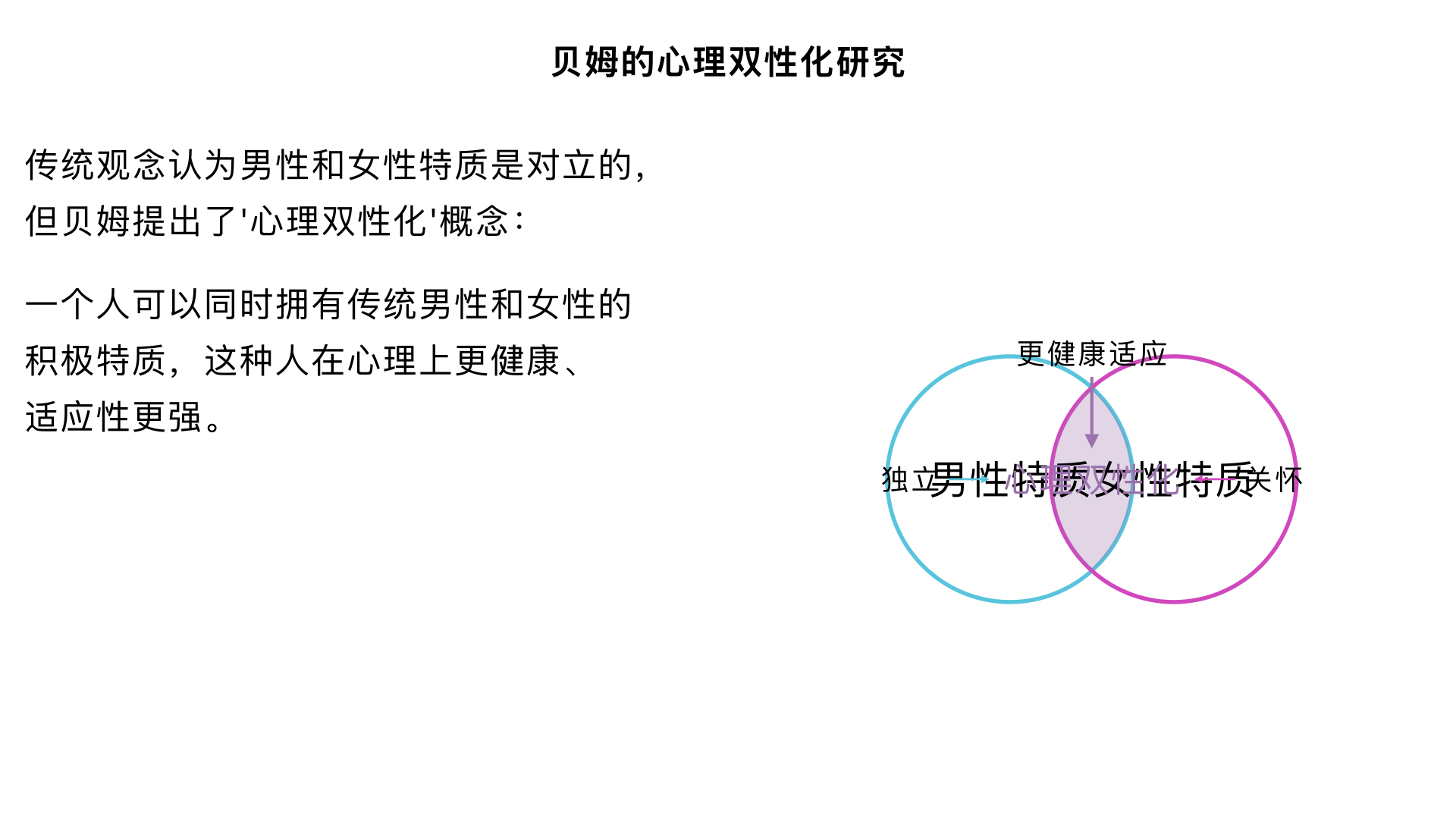
男性和女性 (贝姆的“心理双性化”研究) 主要内容:挑战了传统的男女性别角色二元对立观,提出了“心理双性化”概念,即一个人可以同时拥有传统男性和女性的积极特质,并且这种人在心理上更健康、适应性更强。

▶
损与益——损益盈虚的辩证法则 一、损卦(山泽损):损下益上之道 1. 卦序背景与卦名释义 《序卦传》:“缓必有所失,故受之以损。” 损卦紧接解卦(缓解困难),提示缓解之后可能有所损失。 “损”字本义为减少,卦义为损下益上(减损下方以增益上方)。 2. 卦象分析:山泽损(䷨) 上艮山,下兑泽:山下有泽,泽卑山高,泽水减损以增山高。 卦爻结构:损卦由泰卦(䷊)变来:泰卦九三上行至上位,上六下行至三位(损下卦一阳,益上卦一阴),象征损下益上。 金景芳指出:损卦并非一味强调减损,而是“损所当损”,如损私益公、损己益人。 3. 《彖传》精解 text 损,损下益上,其道上行。 损而有孚,元吉,无咎,可贞,利有攸往。 曷之用?二簋可用享。 二簋应有时,损刚益柔有时。 损益盈虚,与时偕行。 “损下益上,其道上行”:点明损卦的基本性质,损下方之刚以益上方之柔。 “损而有孚”:减损必须心怀诚信,才能得“元吉、无咎、可贞、利有攸往”。 “二簋可用享”:用最简单的两簋食物即可祭祀,强调减损的诚意比形式重要。 “损刚益柔有时”:减损刚强、增益柔弱要适时而行。 “损益盈虚,与时偕行”:总结损益之道需顺应时势,这是全卦的核心思想。 4. 《大象传》:“山下有泽,损。君子以惩忿窒欲。” 君子观此卦象,要克制忿怒(惩忿)、抑制贪欲(窒欲),这是针对个人的减损修养。 5. 爻辞精析 初九:已事遄往,无咎,酌损之。 停下自己的事速去助人(损己益人),但应斟酌减损的程度。 九二:利贞,征凶,弗损益之。 利于守正,出征则凶;此时不应减损,也不应增益。 六三:三人行,则损一人;一人行,则得其友。 揭示阴阳相求的专一性:三人行(多则疑)则损一人,一人行(专一)则得友。 六四:损其疾,使遄有喜,无咎。 减损自己的疾病(错误),迅速改正则喜。 六五:或益之十朋之龟,弗克违,元吉。 有人进献价值十朋的宝龟(象征大助益),无法推辞,至为吉祥。 上九:弗损益之,无咎,贞吉,利有攸往,得臣无家。 不减损也不增益,得臣民拥戴而不分私家(大公无私)。 二、益卦(风雷益):损上益下之道 1. 卦序与卦名 《序卦传》:“损而不已必益,故受之以益。” 损极而益,体现物极必反。 益卦与损卦为综卦,象征损上益下(减损上方以增益下方)。 2. 卦象分析:风雷益(䷩) 上巽风,下震雷:风雷激荡,相互助益。 卦爻来源:益卦由否卦(䷋)变来:否卦九四下行至初位,初六上行至四位(损上卦一阳,益下卦一阴),象征损上益下。 金景芳强调:益卦体现“惠而不费”的施益智慧,强调自上而下的惠泽。 3. 《彖传》精解 text 益,损上益下,民说无疆。 自上下下,其道大光。 利有攸往,中正有庆。 利涉大川,木道乃行。 益动而巽,日进无疆。 天施地生,其益无方。 凡益之道,与时偕行。 “损上益下,民说无疆”:减损上层以增益下层,百姓无限欢悦。 “自上下下,其道大光”:从上施惠于下,其道光大。 “利有攸往,中正有庆”:指六二、九五皆中正,有吉庆。 “利涉大川,木道乃行”:巽为木,震为动,木舟动而可涉险。 “天施地生,其益无方”:天地施生万物,惠益无所不至。 “凡益之道,与时偕行”:与损卦一样,增益也要顺应时势。 4. 《大象传》:“风雷,益。君子以见善则迁,有过则改。” 君子见善则趋从(迁善),有过则改正,这是自我增益的修养。 5. 爻辞精析 初九:利用为大作,元吉,无咎。 利于大兴作,大吉无咎(因受益于上)。 六二:或益之十朋之龟,弗克违,永贞吉。王用享于帝,吉。 得重大助益,长久守正吉;王祭祀天帝,吉。 六三:益之用凶事,无咎。有孚中行,告公用圭。 增益用于救凶平险,无咎;心怀诚信、行中道,执圭告公(谨慎行事)。 六四:中行告公从,利用为依迁国。 行中道而告公,公必听从,利于依附迁徙国都(大事依从众议)。 九五:有孚惠心,勿问元吉。有孚惠我德。 有诚信惠人之心,不必问即知大吉;百姓也以诚信感惠我的恩德。 上九:莫益之,或击之,立心勿恒,凶。 无人增益他,有人攻击他;立心不恒常,凶险。 三、损益二卦的辩证关系总结 损与益的相互转化:损极而益,益极而损,构成循环。 政治哲学的启示: 损卦:损下益上需谨慎,强调“损而有孚”“与时偕行”。 益卦:损上益下得民心,但需“见善则迁,有过则改”。 个人修养的应用:惩忿窒欲(损)、迁善改过(益)。 金景芳总论:损益之道是治国理政与个人修身的重要法则,关键在于把握时机,当损则损,当益则益。
▶
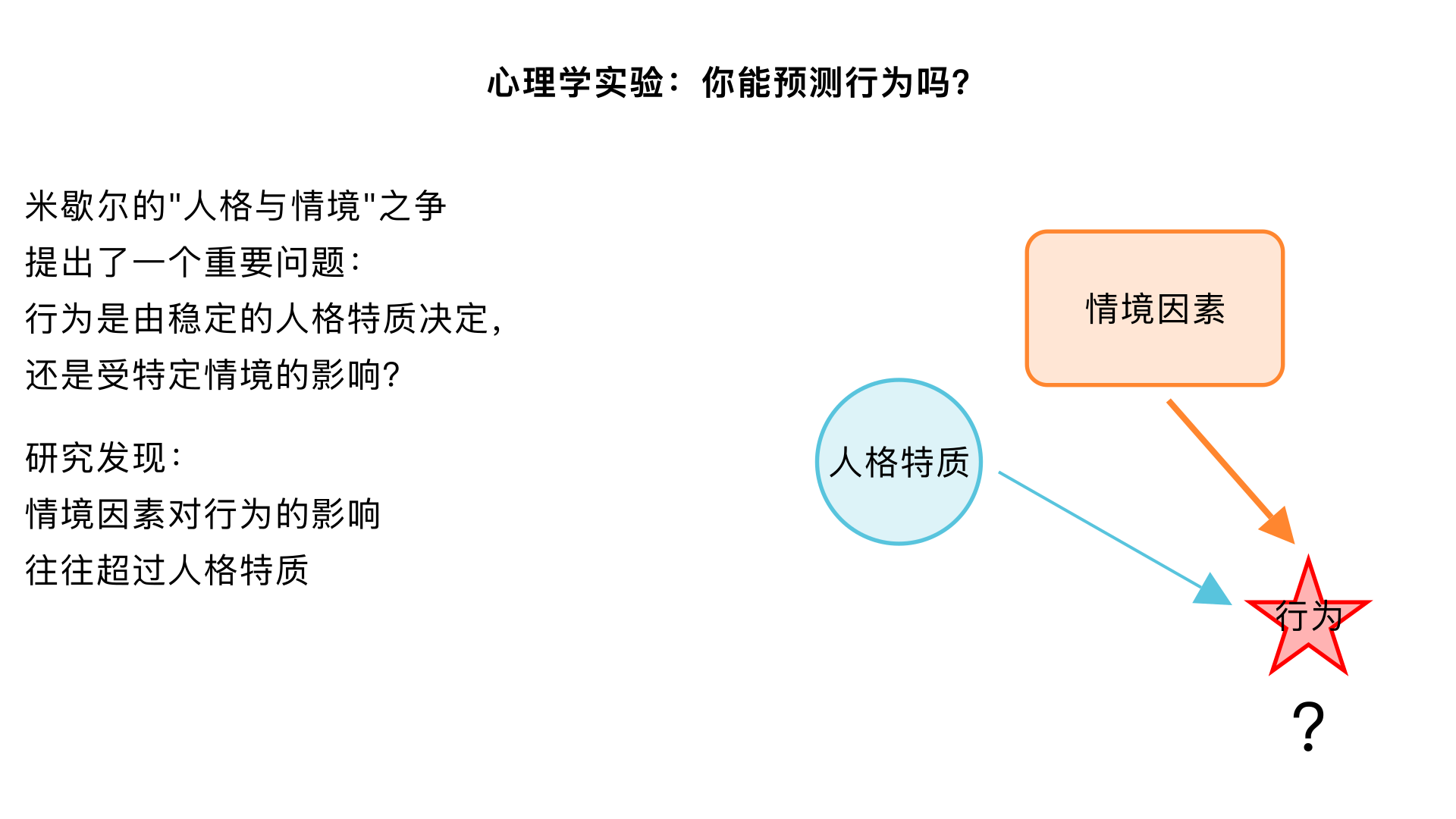
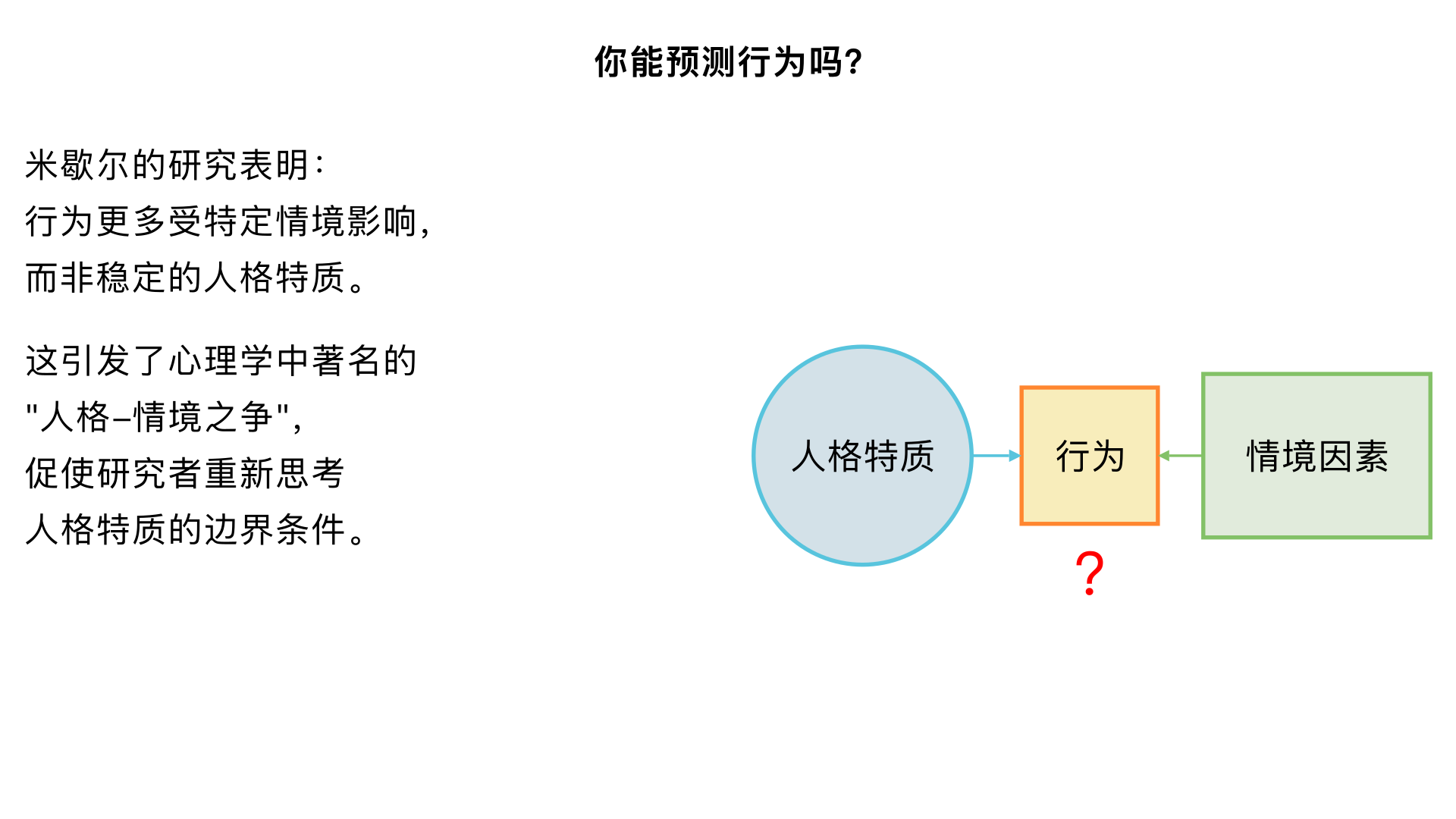
心理学实验:你能预测行为吗? (米歇尔的“人格与情境”之争) 主要内容:通过对大量研究的回顾,提出行为更多地受到特定情境的影响,而非稳定的人格特质。这一观点引发了人格心理学中著名的“人-情境之争”,促使研究者更深入地思考特质的边界条件。
▶
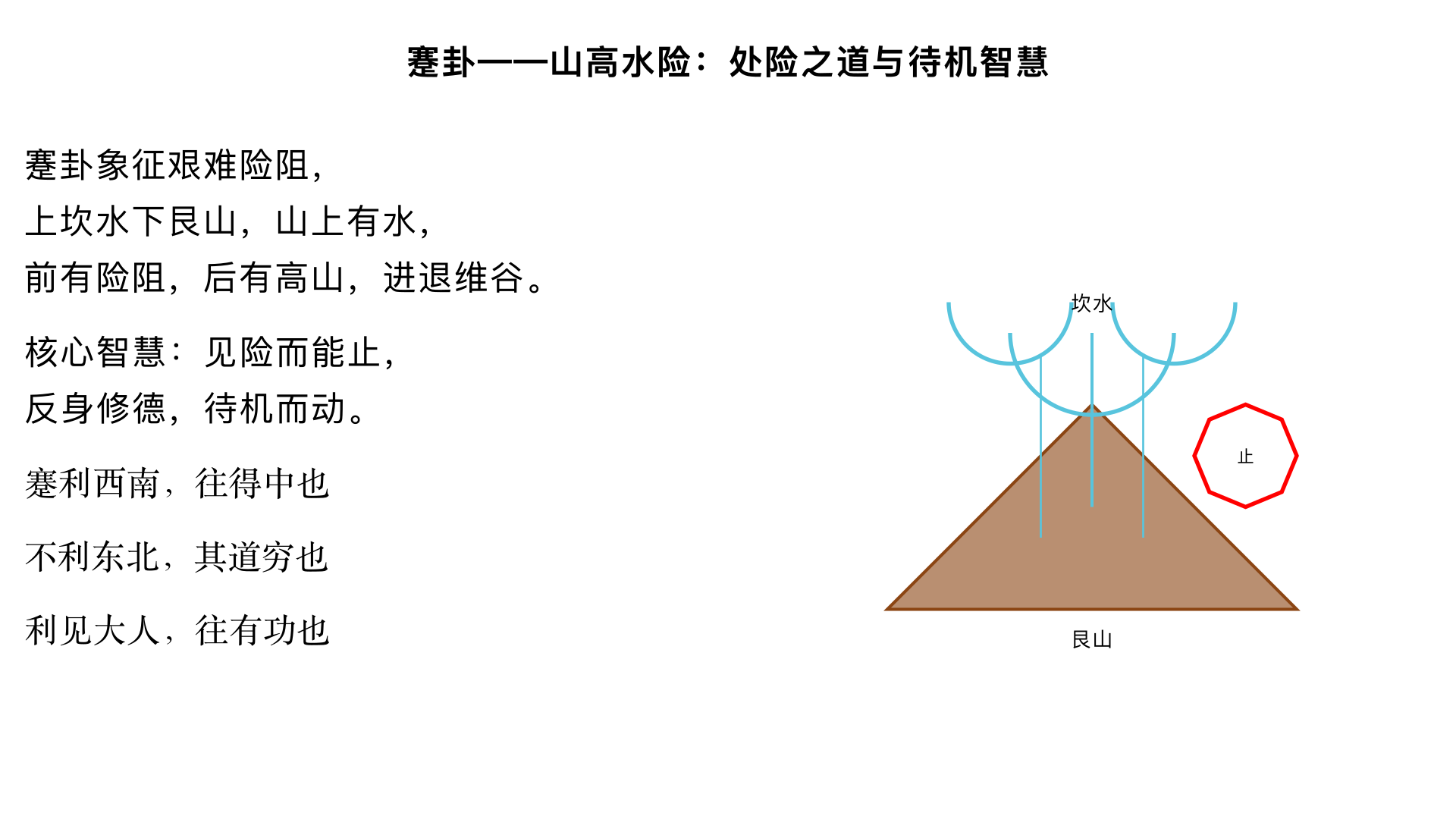
蹇卦——山高水险:处险之道与待机智慧 一、卦序背景:从睽违到艰难 1. 《序卦传》的逻辑 “睽者,乖也。乖必有难,故受之以蹇。蹇者,难也。” 睽卦(火泽睽)讲乖离、矛盾 → 矛盾激化则产生艰难 → 蹇卦(水山蹇)象征艰难险阻 金景芳指出:这是事物发展的必然链条,提示我们见睽当防蹇,及时化解矛盾避免艰难 2. 睽卦与蹇卦的象数关联 睽卦(䷥):上火下泽,二女同居,其志不同行 → 乖离 蹇卦(䷦):上坎下艮,山上有水,险阻在前 → 艰难 二卦互为综卦(蹇卦上下颠倒即睽卦),表明乖离与艰难是同一事物的两面 二、蹇卦(水山蹇)卦象的险阻之境 1. “山上有水”的自然险象 基本卦象:上坎水,下艮山 → 山上有水(瀑布、险流),或山高水险,行路艰难 自然象征: 水在山上:势能高,冲击力强,危险 山本止,水本险:止于险前,进退维谷 金景芳引申:此象可喻人生遇险,前有险阻(坎),后有高山(艮),难以行进 2. 卦德分析与应对原则 下艮为止,上坎为险 → 见险而能止 《彖传》:“蹇,难也,险在前也。见险而能止,知矣哉!” 核心智慧:知险而止,不是畏缩,而是明智的暂停,等待时机 3. 爻位结构中的希望 九五爻:阳刚中正居尊位,为“大人” 六二爻:柔顺中正,与九五正应 → 有应援 金景芳指出:虽处险境,但卦中有中正相应之爻,预示若得“大人”帮助,可济险难 三、彖传精解:处蹇之道 “蹇,难也,险在前也。见险而能止,知矣哉! 蹇利西南,往得中也;不利东北,其道穷也。 利见大人,往有功也。 当位贞吉,以正邦也。 蹇之时用大矣哉!” 1. “见险而能止,知矣哉!”的赞叹 知(智)的表现:不是盲目冒进,而是审时度势 历史例证:刘备被火烧连营后,退守白帝城,不再妄动,是“见险而能止” 反面教材:马谡不顾地势,扎营山上,被断水源,是“见险而不能止” 2. “蹇利西南,往得中也”的方位智慧 西南象征:坤方,平地,顺境(与坤卦“西南得朋”相呼应) “往得中”:前往西南可得中道(因九五居中) 金景芳考据:周族在岐山(东北),纣都在朝歌(西南),文王、武王向东南发展终得天下,是“利西南”的历史体现 3. “不利东北,其道穷也” 东北象征:艮方,山地,险境 “其道穷”:往东北则道途困穷 战略启示:避实就虚,不在艰难处硬碰 4. “利见大人,往有功也” “大人”:指九五,阳刚中正之君 “往有功”:往见大人则能建立功业 现实意义:处困境时,需寻找德才兼备的领导者或贵人 5. “当位贞吉,以正邦也” “当位”:卦中除初六外,其余五爻皆当位(阴居阴,阳居阳) “贞吉”:守正可获吉祥 “以正邦也”:可以端正邦国(即使处险,守正道仍可治国) 金景芳强调:蹇卦虽难,但爻多当位,提示在艰难中更要坚守本分 6. “蹇之时用大矣哉!”的赞叹 蹇卦的时用价值太重大了! 深层含义:艰难不是绝对的坏事,它可以磨砺人、考验人,成就事业 四、大象传:“反身修德”的内求智慧 “山上有水,蹇。君子以反身修德。” 1. “反身修德”四字精义 反身:反省自身,非怨天尤人 修德:修养德性,非向外求索 与《孟子》互证:“行有不得者,皆反求诸己” 2. 历史典范 周文王囚羑里:反身修德,演《周易》 苏轼贬黄州:反身修德,成《赤壁赋》 邓小平三起三落:反身修德,思考改革开放 3. 现代意义:企业危机时,领导者的自我反省与团队建设 五、爻辞精析:处险的六种境遇 蹇卦六爻展示了在不同位置、不同阶段面对艰难的策略,形成一个完整的处险智慧体系。 1. 初六:往蹇来誉。 爻象:初六阴柔居蹇始,上无应援(与六四同阴无应) “往蹇”:前进则遇艰难 “来誉”:退回来则得赞誉(因知止) 策略:力量微弱时,不宜冒进,知难而退是明智 案例:孔子“道不行,乘桴浮于海”,是“来誉” 2. 六二:王臣蹇蹇,匪躬之故。 “王臣蹇蹇”:君王的臣子陷入重重艰难 “匪躬之故”:不是由于自身的缘故(而是为君国) 爻位:六二柔顺中正,与九五君王正应 象征:忠臣为国赴难,鞠躬尽瘁 历史人物:诸葛亮“六出祁山”,是“王臣蹇蹇” 金景芳阐发:此爻体现儒家“为国赴难,义不容辞”的担当精神 3. 九三:往蹇来反。 “往蹇”:前进有险 “来反”:返回原处(反通返) 爻象:九三阳刚得位,处下卦之极,前进则遇坎险 应对:前有险阻,不如返回与初六、六二相守(下卦艮体,宜止) 战术启示:进攻受挫时,退回根据地,巩固基础 4. 六四:往蹇来连。 “往蹇”:前进艰难 “来连”:回来与九三相连(阴阳相合) 爻象:六四阴柔得正,已入坎体,但下与九三亲比 策略:身处险境,需与同志者联合 历史印证:刘备败退当阳,与关羽、张飞、赵云等“来连”,共抗曹操 5. 九五:大蹇朋来。 全卦主爻:处蹇之核心,最为艰难 “大蹇”:巨大的艰难 “朋来”:朋友前来相助 爻象:九五阳刚中正居尊,下应六二,且六四、上六皆来亲附 领袖智慧: 处大难时,因德行感召,得众人相助 如商汤被囚夏台,各方诸侯来救 金景芳强调:九五之“大蹇”是君主为天下承担的艰难,“朋来”是因德得助 6. 上六:往蹇来硕,吉。利见大人。 “往蹇”:前进仍艰难(处蹇极) “来硕”:回来则有大成就(硕,大也) “吉”:吉祥 “利见大人”:利于见九五大人 爻象:上六处蹇之终,前无去路,回归九五方为出路 含义:艰难至极时,回头依附有德领袖,可获大功 历史类比:韩信原从项羽,后“来硕”归刘邦,终成一代名将 六、蹇卦的处险智慧总论 1. 基本策略:“见险而能止” 不是消极避世,而是暂停观察,积蓄力量 2. 方向选择:“利西南,不利东北” 往平易方向(西南)发展,避艰险方向(东北) 3. 关键人物:“利见大人” 寻找德才兼备的领导者或贵人相助 4. 根本态度:“反身修德” 内求于己,修养德性,提高自身 5. 金景芳总结:蹇卦是儒家“处困而亨”思想的体现,强调在艰难中守正修德,待机而动。
▶
你能预测行为吗? (米歇尔的“人格与情境”之争) 主要内容:通过对大量研究的回顾,提出行为更多地受到特定情境的影响,而非稳定的人格特质。这一观点引发了人格心理学中著名的“人-情境之争”,促使研究者更深入地思考特质的边界条件。
▶