T
Teach Me AnythingTMA
Video History
Page 35 / 47![### 5. Verify that the following program segment is correct with respect to the initial assertion *T* and the final assertion: [ (x \le y \land \text{max} = y) \lor (x > y \land \text{max} = x) ] ```plaintext if x <= y then max := y else max := x ``` --- **Solution:** Initial assertion *T* means this segment will always run and everything is always correct at the beginning of the segment. If ( x < y ) initially, *max* is set equal to *y*, so the left side of the final assertion ∨: ((x \le y \land \text{max} = y)) is true. If ( x = y ) initially, *max* is set equal to *y*, so ((x \le y \land \text{max} = y)) is again true. If ( x > y ), *max* is set equal to *x*, so the right side of the final assertion ∨: ((x > y \land \text{max} = x)) is true. Since ∨ is true whenever one or the other or both sides are true, the final assertion is always true and the program segment is correct. 注意使用 mathtex 显示公式
中文解题](https://manimvideo.explanation.fun/video/cover/578435076945432577.png)
▶
### 5. Verify that the following program segment is correct with respect to the initial assertion *T* and the final assertion: [ (x \le y \land \text{max} = y) \lor (x > y \land \text{max} = x) ] ```plaintext if x <= y then max := y else max := x ``` --- **Solution:** Initial assertion *T* means this segment will always run and everything is always correct at the beginning of the segment. If ( x < y ) initially, *max* is set equal to *y*, so the left side of the final assertion ∨: ((x \le y \land \text{max} = y)) is true. If ( x = y ) initially, *max* is set equal to *y*, so ((x \le y \land \text{max} = y)) is again true. If ( x > y ), *max* is set equal to *x*, so the right side of the final assertion ∨: ((x > y \land \text{max} = x)) is true. Since ∨ is true whenever one or the other or both sides are true, the final assertion is always true and the program segment is correct. 注意使用 mathtex 显示公式 中文解题
![### 5. Verify that the following program segment is correct with respect to the initial assertion *T* and the final assertion:
[
(x \le y \land \text{max} = y) \lor (x > y \land \text{max} = x)
]
```plaintext
if x <= y then
max := y
else
max := x
```
---
**Solution:**
Initial assertion *T* means this segment will always run and everything is always correct at the beginning of the segment.
If ( x < y ) initially, *max* is set equal to *y*, so the left side of the final assertion ∨:
((x \le y \land \text{max} = y)) is true.
If ( x = y ) initially, *max* is set equal to *y*, so ((x \le y \land \text{max} = y)) is again true.
If ( x > y ), *max* is set equal to *x*, so the right side of the final assertion ∨:
((x > y \land \text{max} = x)) is true.
Since ∨ is true whenever one or the other or both sides are true, the final assertion is always true and the program segment is correct.
注意使用 mathtex 显示公式](https://manimvideo.explanation.fun/video/cover/578434488337780737.png)
▶
### 5. Verify that the following program segment is correct with respect to the initial assertion *T* and the final assertion: [ (x \le y \land \text{max} = y) \lor (x > y \land \text{max} = x) ] ```plaintext if x <= y then max := y else max := x ``` --- **Solution:** Initial assertion *T* means this segment will always run and everything is always correct at the beginning of the segment. If ( x < y ) initially, *max* is set equal to *y*, so the left side of the final assertion ∨: ((x \le y \land \text{max} = y)) is true. If ( x = y ) initially, *max* is set equal to *y*, so ((x \le y \land \text{max} = y)) is again true. If ( x > y ), *max* is set equal to *x*, so the right side of the final assertion ∨: ((x > y \land \text{max} = x)) is true. Since ∨ is true whenever one or the other or both sides are true, the final assertion is always true and the program segment is correct. 注意使用 mathtex 显示公式
▶
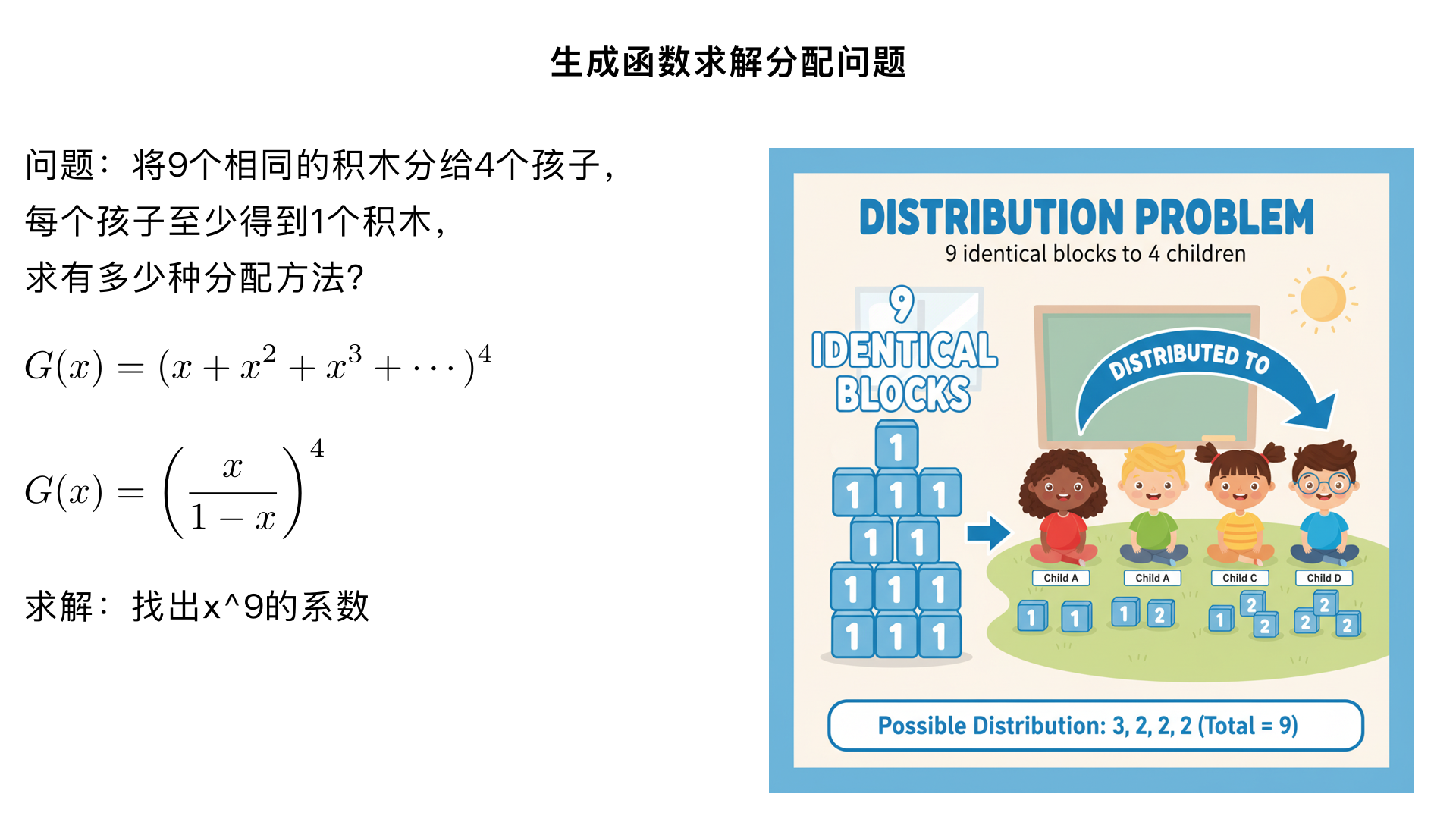
Set up a generating function and use it to find the number of ways in which nine identical blocks can be given to four children if each child gets at least one block.
![3. Solve the recurrence relation
\[
a_n = 2a_{n-1}
\]
using generating functions. Where \( a_0 = 1 \)
*Note:* *I won’t ask a harder one than this if specifically requesting generating functions to solve a recurrence.*
注意公式使用 mathtex](https://manimvideo.explanation.fun/video/cover/578398786136838145.png)
▶
3. Solve the recurrence relation \[ a_n = 2a_{n-1} \] using generating functions. Where \( a_0 = 1 \) *Note:* *I won’t ask a harder one than this if specifically requesting generating functions to solve a recurrence.* 注意公式使用 mathtex
▶
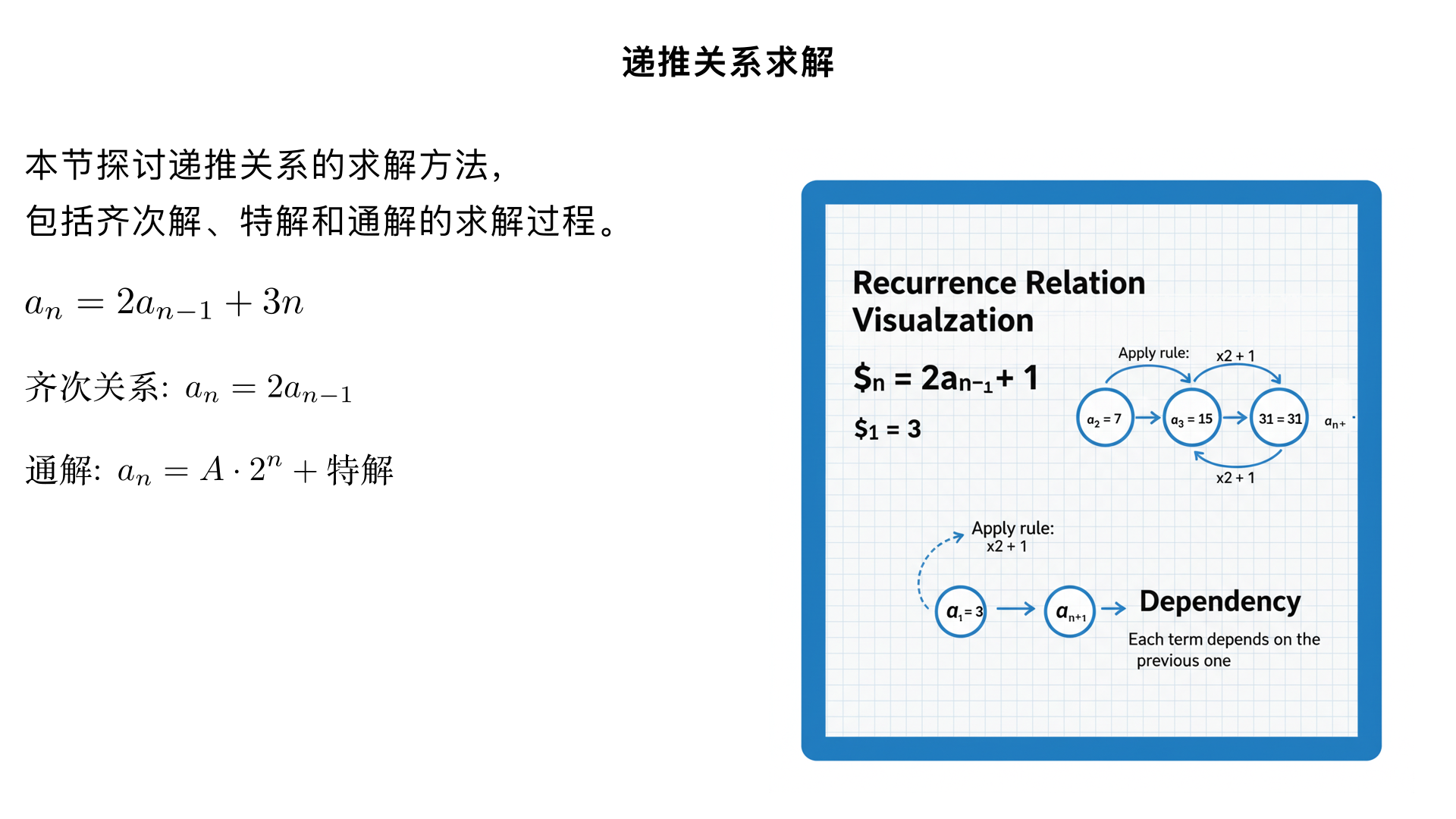
### 2. Consider the recurrence relation ( a_n = 2a_{n-1} + 3n ) **(a)** Write the associated homogeneous recurrence relation. --- **(b)** Find the general solution to the associated homogeneous recurrence relation. --- **(c)** Find the particular solution to the given recurrence relation. --- **(d)** Give the general solution to the given recurrence relation. --- **(e)** Find the solution to the given recurrence relation when ( a_0 = 1 )
▶
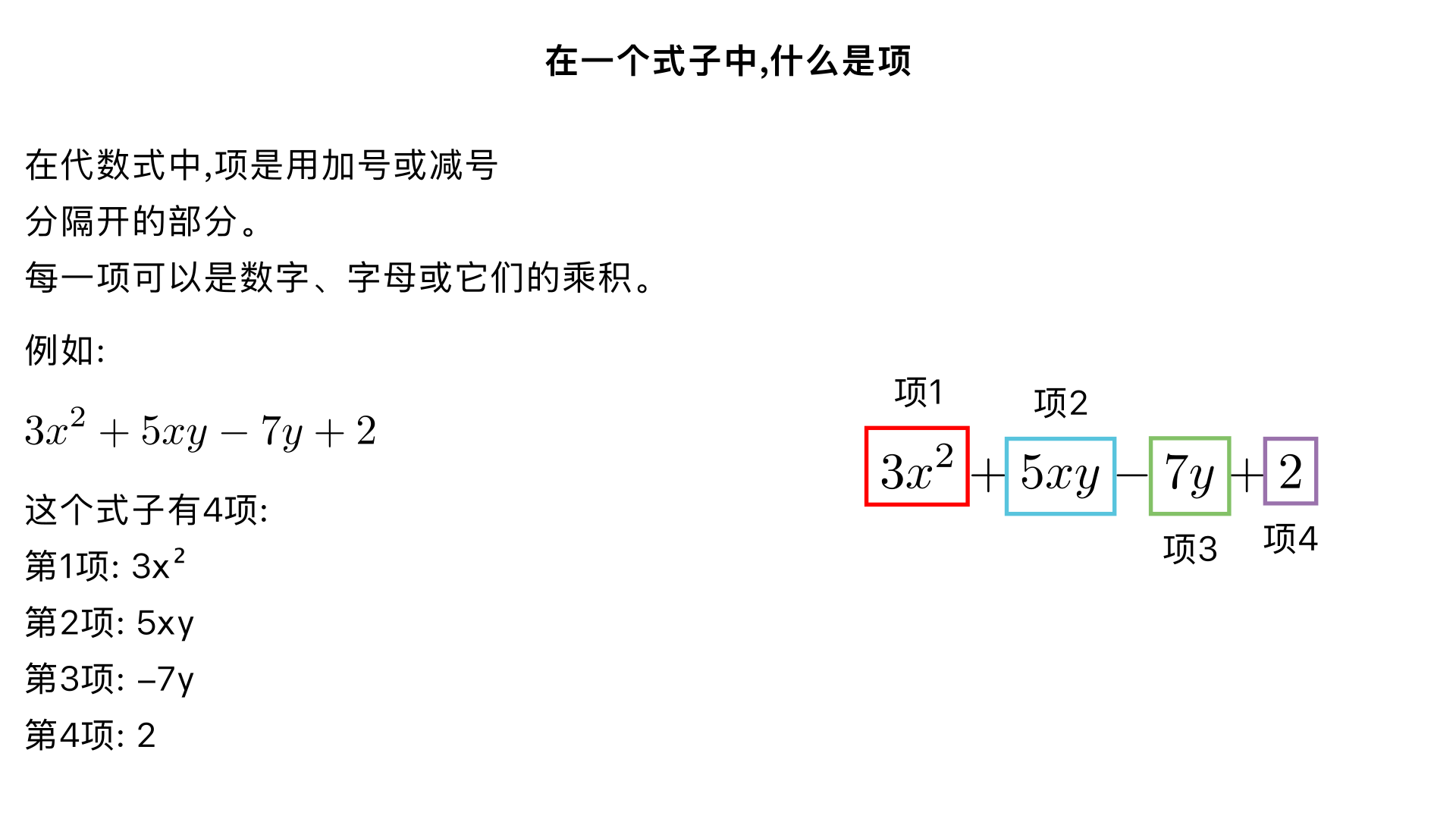
在一个式子中,什么是项
▶
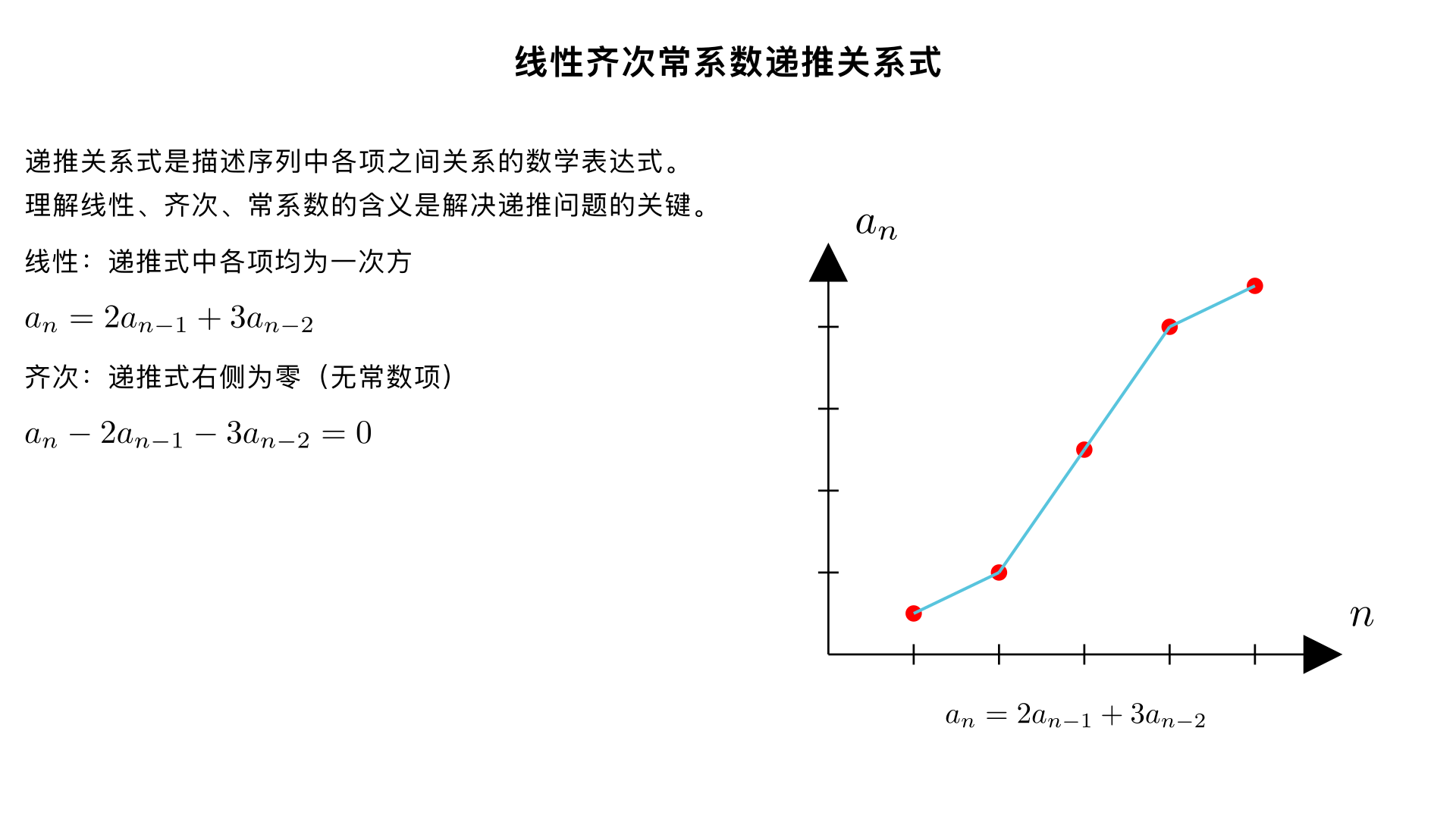
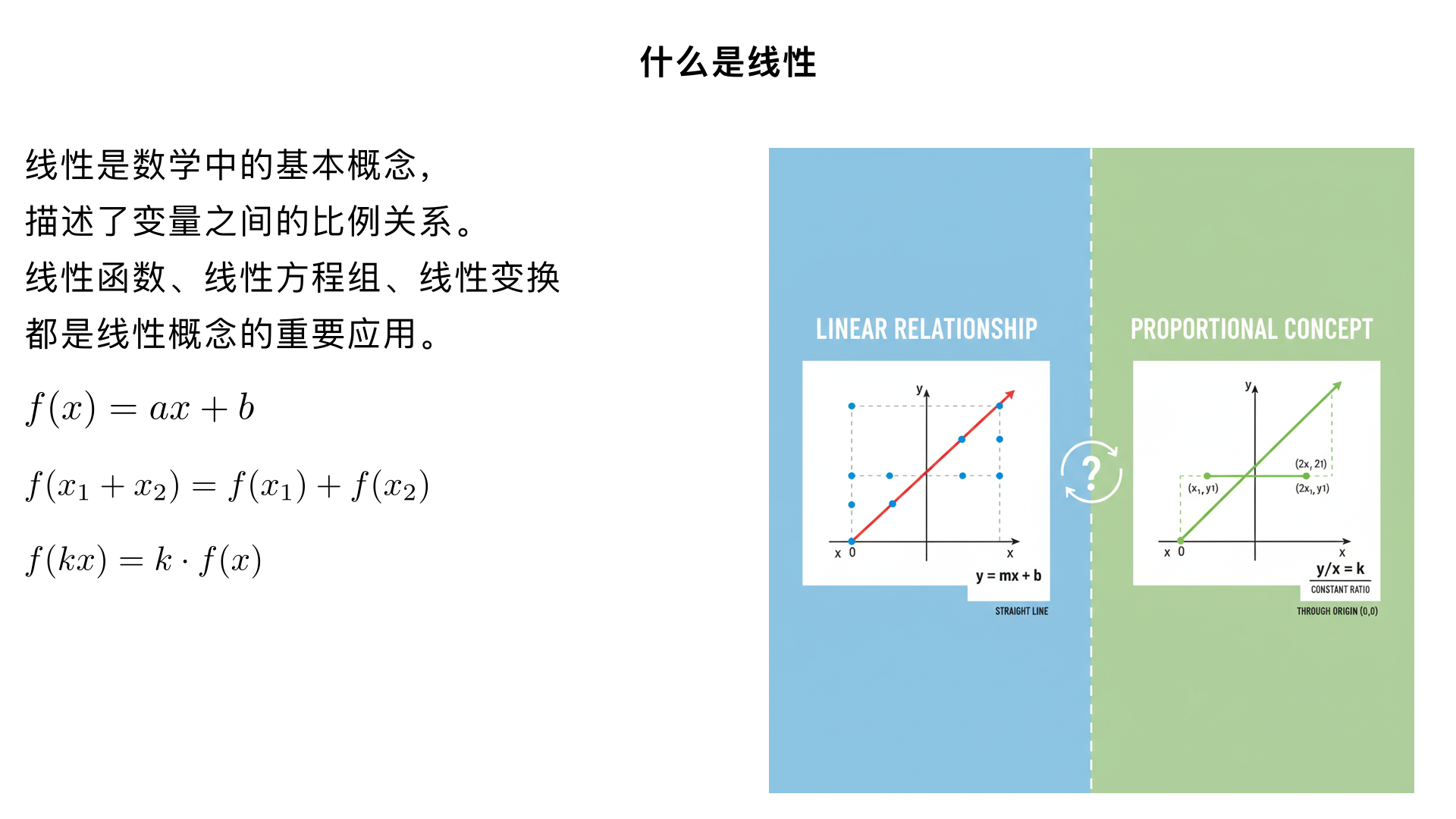
线性齐次常系数递推关系式 什么是线性,什么是齐次
▶
什么时线性
▶
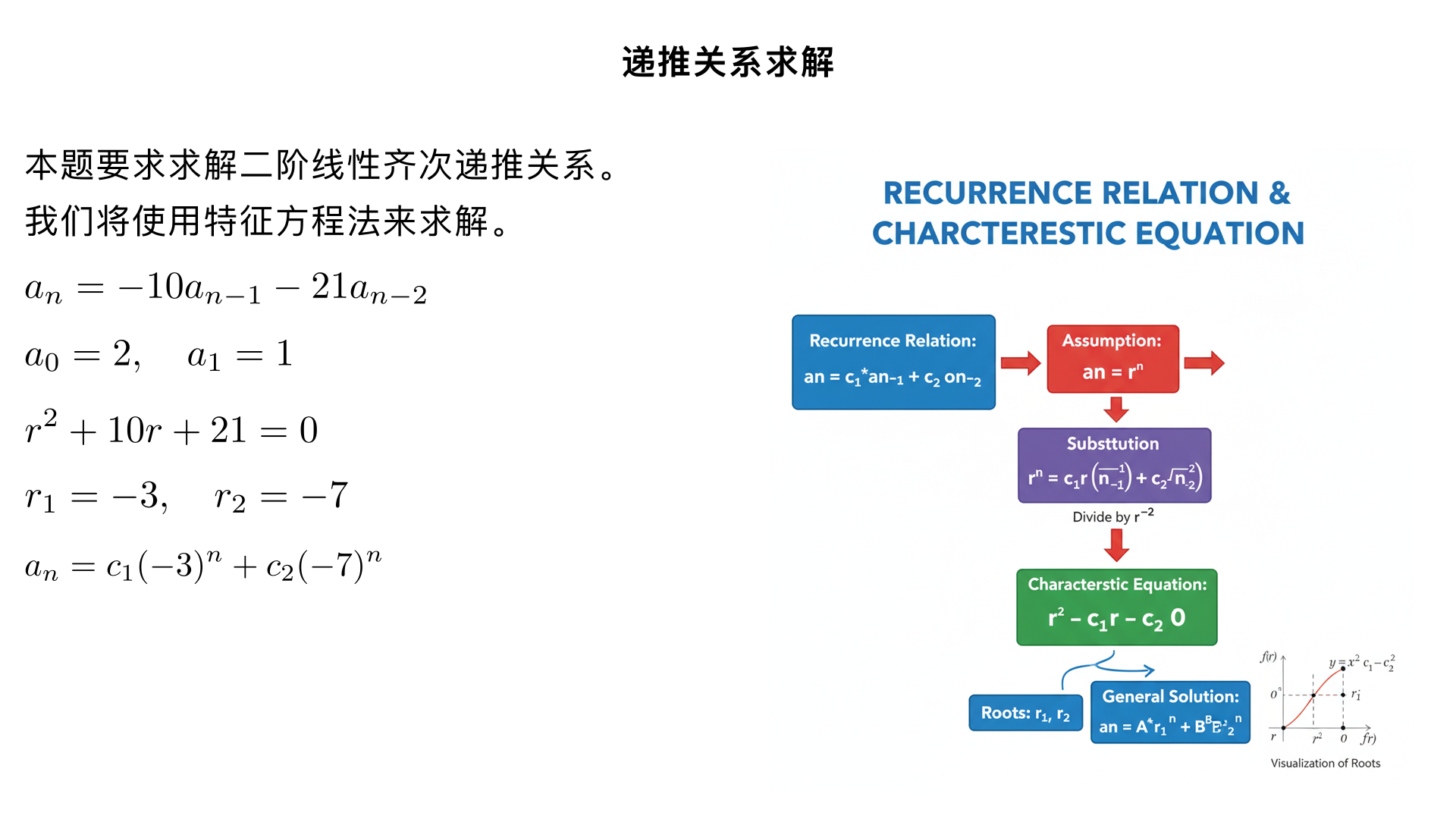
Solve this recurrence relation using any method learned in class: aₙ = -10aₙ₋₁ - 21aₙ₋₂ where: a₀ = 2, a₁ = 1.
▶
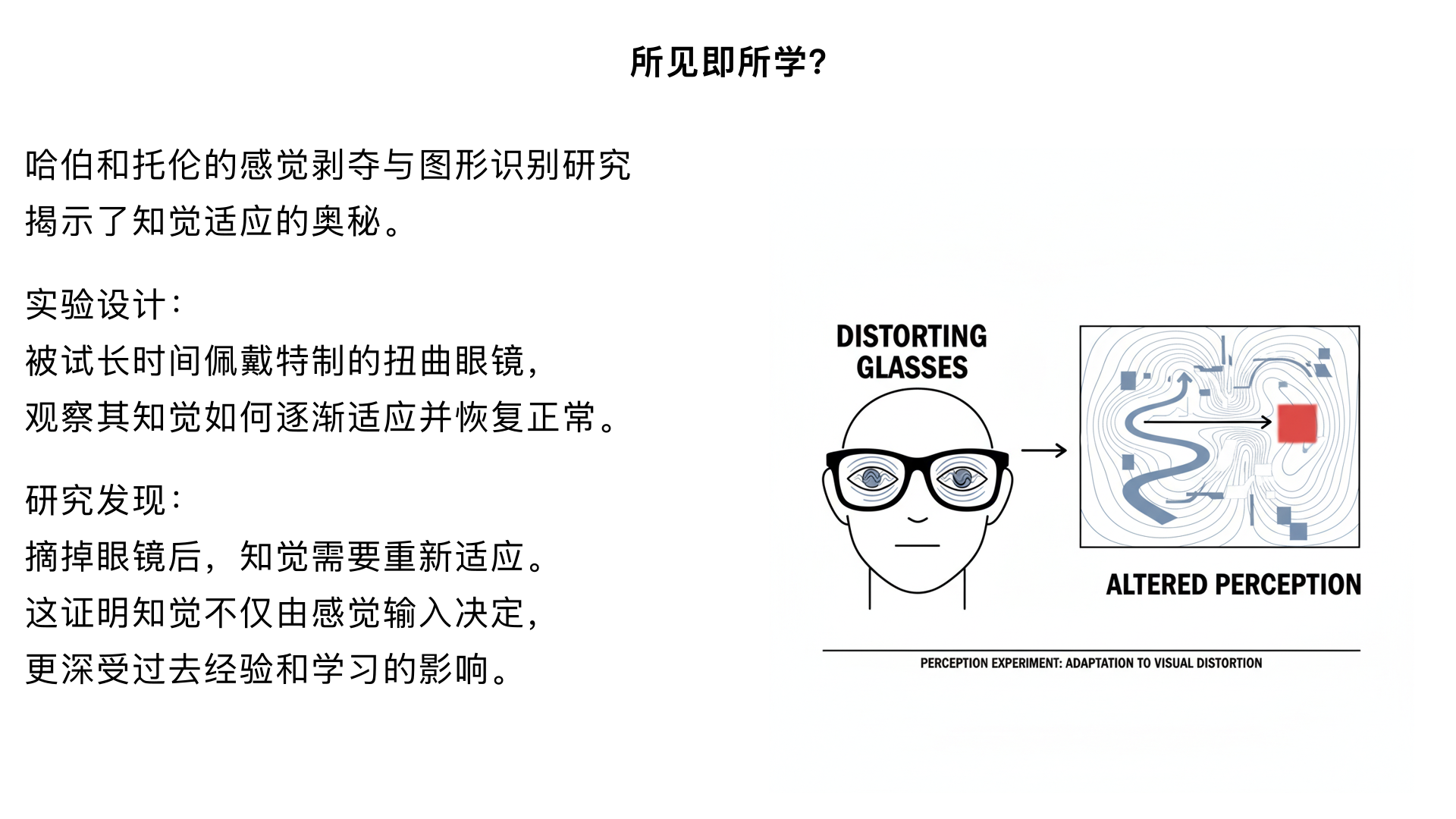
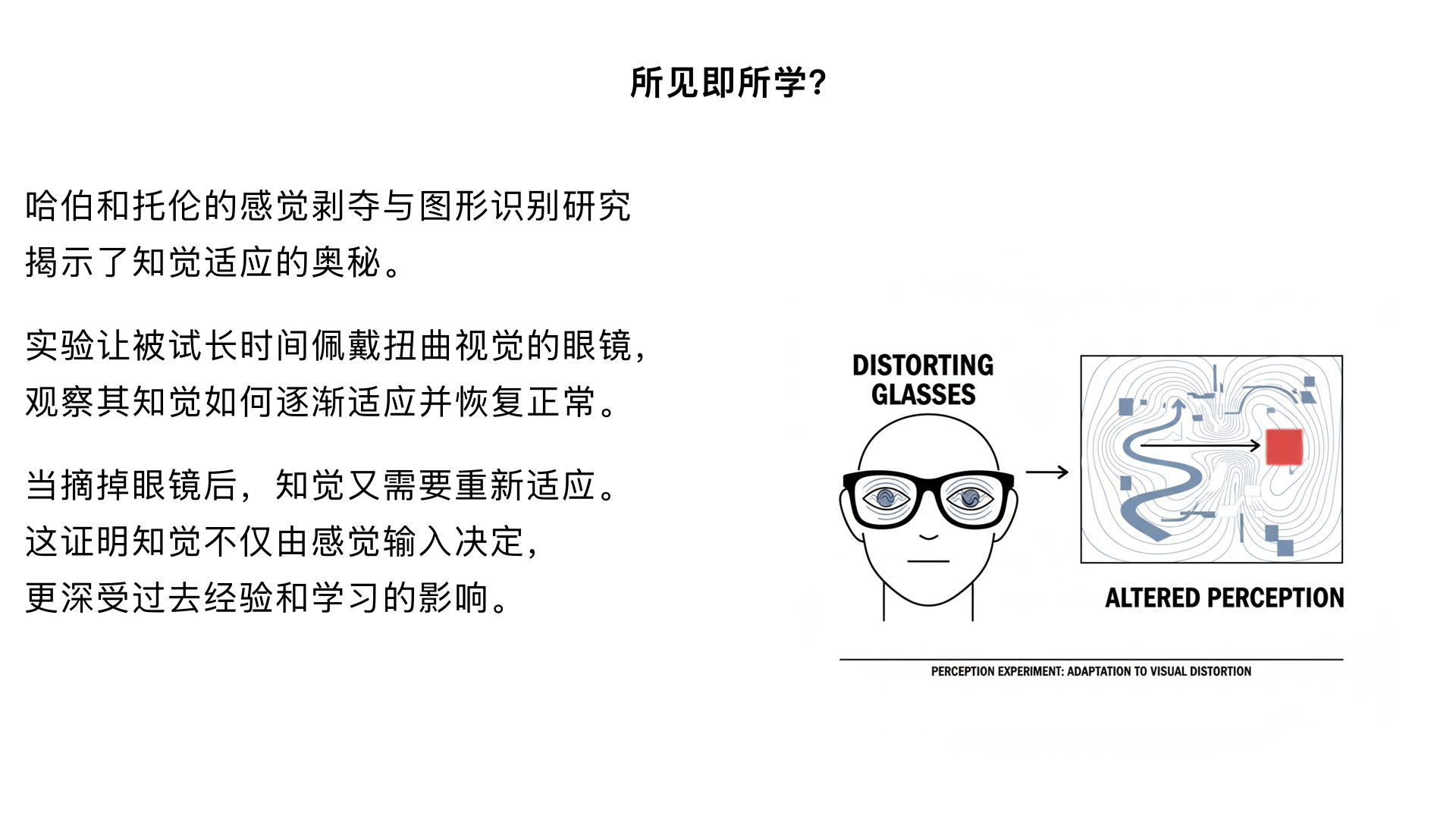
所见即所学? (哈伯和托伦的“感觉剥夺与图形识别”研究) 主要内容:让被试长时间佩戴特制的 distorting 眼镜,发现其知觉逐渐适应并恢复正常。但当摘掉眼镜后,其知觉又需要重新适应。这证明知觉不仅由感觉输入决定,更深受过去经验和学习的影响。
▶
5、所见即所学? (哈伯和托伦的“感觉剥夺与图形识别”研究) 主要内容:让被试长时间佩戴特制的 distorting 眼镜,发现其知觉逐渐适应并恢复正常。但当摘掉眼镜后,其知觉又需要重新适应。这证明知觉不仅由感觉输入决定,更深受过去经验和学习的影响。

▶